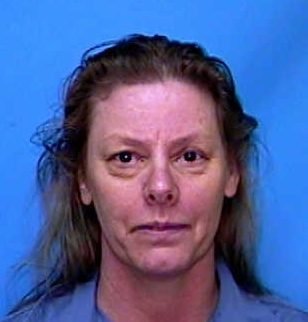
Aileen Wuornos
1956–2002 · American serial killer and sex worker
Illness: Borderline and antisocial personality disorders
More about: Antisocial personality disorder, Borderline personality disorder
Aileen Wuornos was an American woman who, between 1989 and 1990, shot and killed seven men along highways in Florida while working as a street sex worker. She was born in Rochester, Michigan, in 1956, into a childhood marked by abandonment and violence. Her mother left her in the care of her grandparents when she was almost four, and her father, convicted of kidnapping and raping a young girl, died by suicide in prison in 1969 without her ever having met him. By her own account, she suffered physical and sexual abuse as a child.
From her teenage years she had repeated run-ins with the law, including arrests for drunk driving and disorderly conduct. Emotional crises, impulsive behaviour and unstable relationships were a constant feature of her life. At her trial in 1992, psychiatrists for the defence diagnosed her with borderline personality disorder, a condition marked by intense emotional instability and a fear of abandonment, and with antisocial personality disorder, which involves a persistent disregard for social rules and the rights of others. Effective treatment for such conditions was limited at the time, and the institutional response centred on custody and legal assessment.
Wuornos claimed that her victims had raped or attempted to rape her and that she had acted in self-defence. She later abandoned this account. In an exchange with filmmaker Nick Broomfield, which she believed was not being recorded, she acknowledged that self-defence applied only in some cases. She was sentenced to death for six murders and spent more than ten years on death row, where at times she said she wanted everything to end. In 2001 she dropped her remaining appeals, and in 2002 she was executed by lethal injection in Florida.
Today it is not possible to confirm personality diagnoses for someone who died decades ago, and those made in her case were produced in a legal setting, which makes them debated. Some specialists have linked her behaviour to psychopathic traits and to her traumatic past, and argue that childhood trauma may have contributed to her borderline disorder. Her story has also shaped popular culture, through documentaries, films and songs, and it has renewed debate about her trial, the death penalty and how society understands violence committed by women.
Key dates
- 1960 Her mother abandons her, and she and her brother are raised by their grandparents, who later adopt them legally.
- 1969 Her father dies by suicide in a prison in Kansas.
- 1976 She is arrested for assault after an incident in a bar in Antrim County.
- 1992 At her trial, defence psychiatrists diagnose borderline and antisocial personality disorder, and she receives her first death sentence.
- 2002 She is executed by lethal injection at Florida State Prison.
Curiosities and anecdotes
A reused police photograph
In 2019 rapper Cardi B recreated Wuornos' famous police mugshot for her single 'Press'.
An album song about her
The song 'If the Poison Won't Take You My Dogs Will', from Lingua Ignota's 2019 album Caligula, is also about Wuornos.
Sources
Original Medicapedia text based on:

Last updated: 5 November 2026 · How Medicapedia is made
A project by Alejandro Rosàs Navarro, family physician and specialist in preventive medicine and public health. Spotted a mistake? Write to info@medicapedia.org.