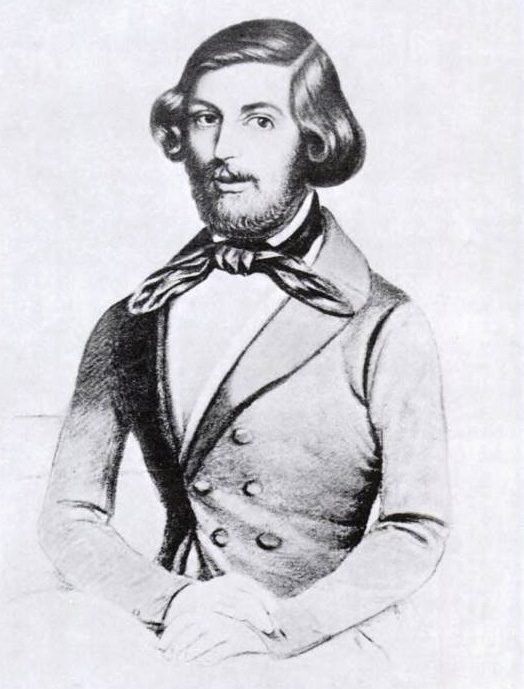
Gotthold Eisenstein
1823–1852 · German mathematician of number theory
Illness: Tuberculosis and childhood meningitis
More about: Tuberculosis
Ferdinand Gotthold Max Eisenstein was a German mathematician born in Berlin who made important contributions to number theory and analysis before dying at the age of 29. The son of Jewish parents who had converted to Protestantism before his birth, he showed a remarkable aptitude for mathematics from childhood.
His health was fragile throughout his life. In childhood he suffered from meningitis, an inflammation of the membranes that surround the brain and spinal cord. It is said that the same disease caused the deaths of his five siblings. To cope with his weakness he was sent to boarding schools on the outskirts of Berlin. Despite this, he studied with great success, mastered the mathematics curriculum by the age of fifteen and attended lectures by Dirichlet at the University of Berlin while still a student.
Tuberculosis is a bacterial infection, caused by the bacillus that Robert Koch identified in 1882, which mainly affects the lungs and spreads through the air. Eisenstein suffered from it in a progressive way: he fell ill often, sometimes gave lectures from his bed and, in late July 1852, suffered a haemorrhage that marked the end. In the medicine of his time there was no effective treatment; care was limited to rest, nutrition and relief of symptoms, with no possibility of curing the infection. His temperament, marked by hypochondria, worsened over the years.
Today it is known that tuberculosis can be cured with specific antibiotics, something impossible in the nineteenth century. As for the meningitis of his childhood, its cause cannot be determined with certainty from the information available from that time, so any retrospective diagnosis should be treated as a hypothesis.
His illness shaped both his life and his work. Thanks to Alexander von Humboldt, who obtained grants from the king, the Prussian government and the Berlin Academy, he was able to devote himself to research despite his poverty; in total about 5300 thalers were raised. Between 1843 and 1848 he published numerous papers in Crelle's Journal, including two proofs of the law of quartic reciprocity. He kept writing until the end on quadratic partitions of prime numbers and reciprocity laws. He died in Berlin on 11 October 1852 and was buried in the Friedhof am Blücherplatz cemetery.
Key dates
- 1823 Born in Berlin to a family that had moved from Judaism to Protestantism.
- 1843 Meets William Rowan Hamilton in Dublin, who sparks his interest in mathematical research.
- 1852 In July he suffers a haemorrhage caused by tuberculosis, which decisively worsens his condition.
- 1852 Dies in Berlin on 11 October, aged 29.
Curiosities and anecdotes
An early interest
An acquaintance of the family awakened his interest in mathematics when he was six years old. He also played the piano and composed music.
A visit to Gauss
During his years in Berlin he visited Carl Friedrich Gauss in Göttingen and received an honorary doctorate.
Sources
Original Medicapedia text based on:

Last updated: 5 November 2026 · How Medicapedia is made
A project by Alejandro Rosàs Navarro, family physician and specialist in preventive medicine and public health. Spotted a mistake? Write to info@medicapedia.org.