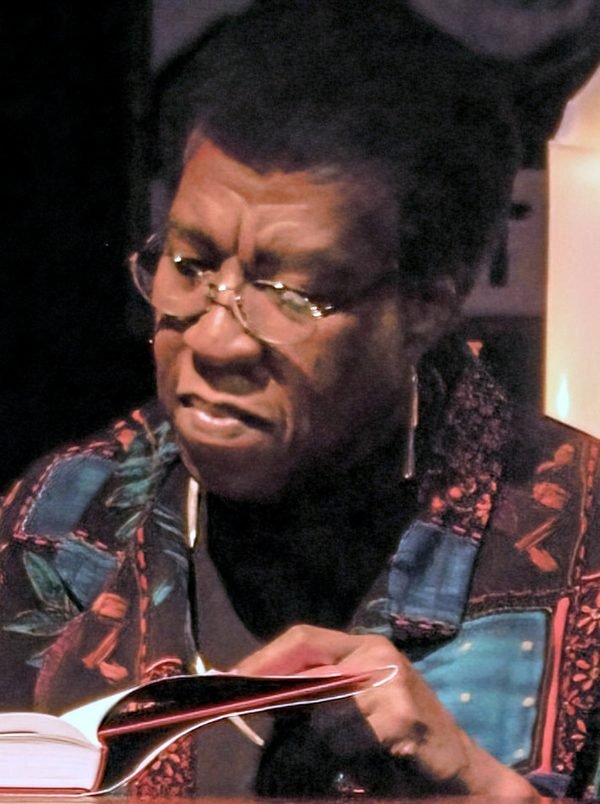
Octavia E. Butler
1947–2006 · American science fiction writer and Afrofuturist
Illness: Dyslexia
Also on: their work on Filopedia
Octavia E. Butler (Pasadena, 1947 – Lake Forest Park, 2006) was an American science fiction writer and one of the most recognised voices in Afrofuturism, a movement that combines African-American themes with technology and the future. She won the Hugo and Nebula awards more than once and, in 1995, became the first science fiction writer to receive a MacArthur Fellowship.
Dyslexia is a learning difficulty of neurological origin that mainly affects reading and writing, and it has no relation to intelligence. Butler was a shy and avid reader as a child, and she was later diagnosed with the condition. The sources do not specify her age at diagnosis or how it was carried out. During her school years dyslexia was poorly understood, and many children with the difficulty were regarded as slow or careless. Specialised educational support developed later. The sources do not describe a specific treatment for her dyslexia. Her connection with words grew instead through reading and writing, which she practised from a very young age.
Today dyslexia is understood as a different way of processing written language, addressed with adapted teaching support. It is a neurodevelopmental condition rather than an illness in the strict sense, although this section treats it as one by convention.
Her final years were also marked by other health problems. According to the sources, she struggled with writer’s block and depression, partly attributed to side effects of medication for high blood pressure. She died near her home in 2006, aged 58. Contemporary reports disagreed: some described a fatal stroke, while others said she died of head injuries after a fall. One interpretation holds that a stroke caused the fall.
The sources do not link her dyslexia to her work, but they do show her interest in reading and writing, which led her to write stories from childhood. Novels such as the Patternist series, Kindred and the Xenogenesis trilogy explore power, society and survival through marginalised characters.
Key dates
- 1947 Born in Pasadena, California, and raised by her mother and grandmother.
- 1965 Wins a competition at Pasadena City College with the story “To the Victor”, submitted under a pen name.
- 1995 Receives a MacArthur Fellowship, becoming the first science fiction writer to be honoured with it.
- 1999 After her mother’s death, moves to Lake Forest Park, Washington.
- 2006 Dies in Lake Forest Park at the age of 58.
Curiosities and anecdotes
An unexpected trigger
According to the sources, she began writing her own stories at twelve, after watching a poor science fiction film and deciding that she could write something of her own.
Her first manuscript
Her junior high school science teacher, William Pfaff, typed the first manuscript she sent to a science fiction magazine.
A posthumous award
In 2022 she received the first Infinity Award from the Science Fiction and Fantasy Writers Association, given to authors who died before they could be considered for a Grand Master award.
Sources
Original Medicapedia text based on:

Last updated: 5 November 2026 · How Medicapedia is made
A project by Alejandro Rosàs Navarro, family physician and specialist in preventive medicine and public health. Spotted a mistake? Write to info@medicapedia.org.