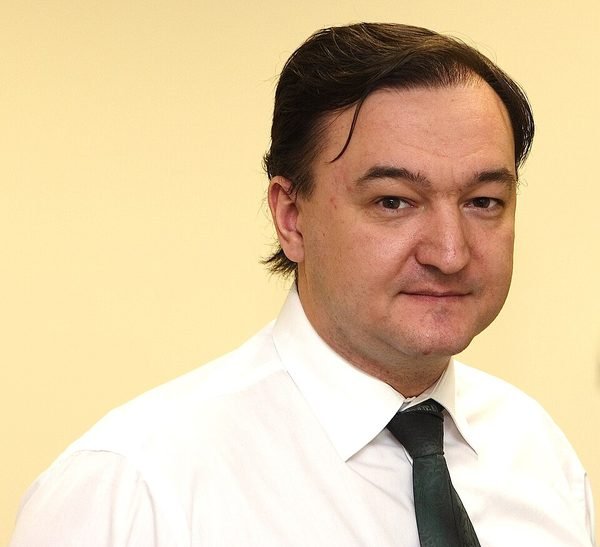
Sergei Magnitsky
1972–2009 · Russian tax adviser and auditor
Illness: Gallstones and pancreatitis
More about: Blunt trauma, Gallstone disease
Sergei Magnitsky (1972-2009) was a Russian lawyer and tax adviser who worked for the investment firm Hermitage Capital Management. In the course of his work he alleged that a large-scale tax fraud had taken place, one in which, according to his account, state officials and police officers had taken part. His arrest in November 2008 and his death in prison a year later became a case of international significance.
His health deteriorated while he was in custody. He developed gallstones, small hardened deposits that form in the gall bladder and can block the duct that carries bile, leading to inflammation of the gall bladder known as cholecystitis. He also suffered from pancreatitis, an inflammation of the pancreas, the gland behind the stomach. During almost eleven months of pre-trial detention in Butyrka prison in Moscow, he received treatment that many observers regarded as inadequate. In June 2009 an operation was ordered, but it was never carried out.
Magnitsky died on 16 November 2009, only days before the one-year limit on detention without trial would have expired. Prison authorities first attributed his death to a rupture of the abdominal lining and later to a heart attack. A human rights council set up by the Kremlin concluded that he had been physically assaulted shortly before his death, and the death certificate mentioned injuries to the head. Some of those involved were later tried in a posthumous trial, an unusual event in the Russian Federation.
Today, gallstones and pancreatitis are well-known conditions that can usually be treated, often with surgery. Doctors and historians still debate whether the lack of care amounted to serious negligence or something more deliberate, and the hypothesis that he was beaten to death has not been accepted by every inquiry. Russian authorities have at different times defended different accounts, some of them focused on Magnitsky himself.
His case had lasting political consequences. At the end of 2012 the United States adopted the Magnitsky Act, which bars Russian officials believed to be responsible for his death from entering the country and from using its banking system. Russia responded by blocking hundreds of adoptions of Russian children by American citizens. Several other countries and the European Union have since passed similar laws, and Magnitsky's name has become a symbol in the fight against corruption and human rights abuses.
Key dates
- 2008: Magnitsky is arrested in Moscow and imprisoned in Butyrka prison, accused of collusion with Hermitage.
- 2009: In June an operation on his gall bladder is ordered, but it is never performed.
- 2009: On 16 November he dies in prison, days before the one-year limit on detention without trial would have expired.
- 2012: The United States enacts the Magnitsky Act, sanctioning Russian officials implicated in his death.
Curiosities and anecdotes
A posthumous trial
His posthumous trial was the first of its kind in the Russian Federation. It took place years after his death.
Blocked adoptions
In response to the Magnitsky Act, Russia blocked hundreds of adoptions of Russian children by American citizens, extending the dispute well beyond criminal justice.
Sources
Original Medicapedia text based on:

Last updated: 5 November 2026 · How Medicapedia is made
A project by Alejandro Rosàs Navarro, family physician and specialist in preventive medicine and public health. Spotted a mistake? Write to info@medicapedia.org.