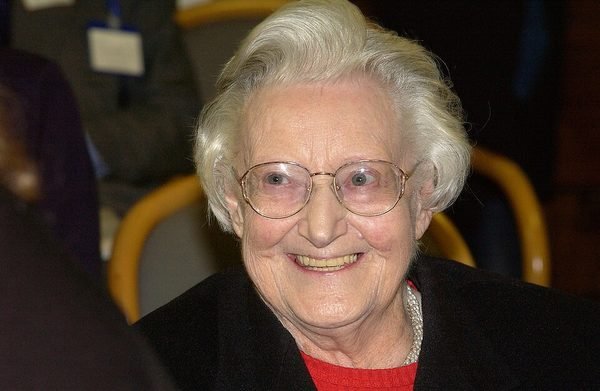
Cicely Saunders
1918–2005 · British nurse, social worker and physician, pioneer of palliative care
Cicely Saunders (Barnet, 1918 – London, 2005) was a British nurse, social worker and physician. She is one of the central figures of palliative care, the approach that seeks to relieve the suffering of people with serious or terminal illness when cure is no longer possible, and her name is closely linked to the birth of the modern hospice movement.
The daughter of a chartered surveyor and landowner, she studied politics, philosophy and economics at St Anne's College, Oxford. During the Second World War she decided to become a nurse and trained at St Thomas's Hospital in London. She later qualified as a medical social worker and, in the early 1950s, began studying medicine, qualifying in 1957. While working at St Joseph's Hospice in Hackney, she spent years researching pain control in cancer patients.
Her central proposal was a different kind of hospice. In 1967 she opened St Christopher's Hospice in Sydenham, south London, regarded as the first hospice purpose-built for this work. It combined teaching and clinical research with expert control of pain and other symptoms, and with holistic care that addressed the physical, social, psychological and spiritual needs of patients and their families. Her well-known principle that a patient "matters to the last moment of life" summed up this philosophy. She served the hospice first as medical director and later as chair.
Saunders introduced the idea of "total pain", which covers physical, emotional, social and spiritual distress. She opposed voluntary euthanasia, arguing that effective pain control makes it unnecessary, while acknowledging that both sides of the debate wanted to avoid suffering and loss of dignity. In the 1980s she also expressed reservations about admitting patients with AIDS to her hospice, citing the fears this could cause other families.
She received many honours, including the Templeton Prize in 1981 and the title of Dame Commander of the Order of the British Empire in 1979. She died in 2005 at the hospice she had founded. Her legacy endures in the spread of palliative care around the world.
Contributions
- Total pain: a concept describing suffering as physical, emotional, social and spiritual at the same time.
- St Christopher's Hospice: the first hospice purpose-built to care for people with terminal illness, opened in London in 1967.
- Palliative care: a medical specialty that took shape largely through her work, focused on relieving symptoms rather than curing disease.
- Pain control: clinical research into medication and symptom management in cancer patients.
Curiosities and anecdotes
A window of glass
A Polish patient, David Tasma, left her £500 on condition that it be "a window in your home". The gift helped shape the hospice idea, and a plain sheet of glass at its entrance commemorates it.
An age gap
In 1980 she married the painter Marian Bohusz-Szyszko, who was 79 while she was 61. She had long supported his art, and much of his work hangs at the hospice today.
Sources
Original Medicapedia text based on:

Last updated: 5 November 2026 · How Medicapedia is made
A project by Alejandro Rosàs Navarro, family physician and specialist in preventive medicine and public health. Spotted a mistake? Write to info@medicapedia.org.