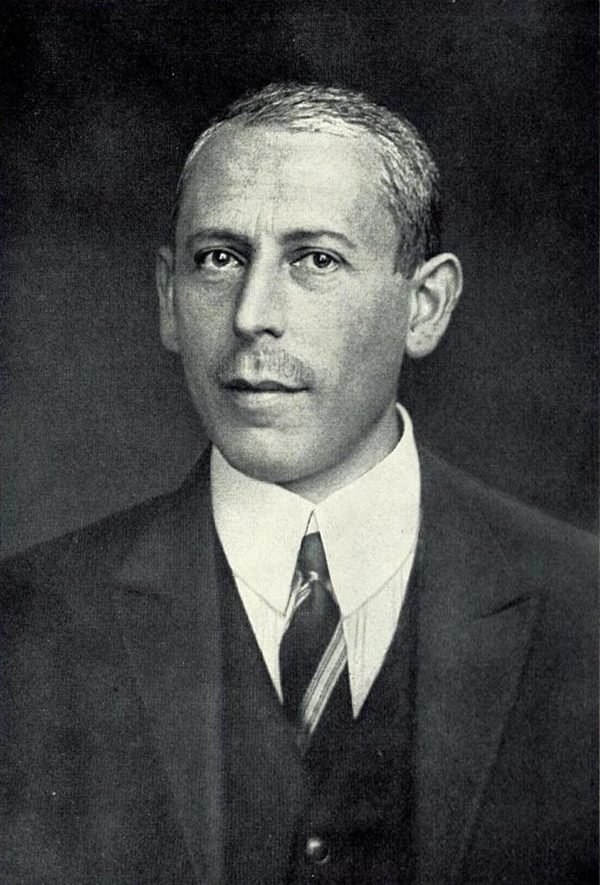
Karl Abraham
1877–1925 · German psychoanalyst and disciple of Freud
Karl Abraham (Bremen, 1877 – Berlin, 1925) was one of the first German psychoanalysts and one of the closest collaborators of Sigmund Freud, who called him his 'best pupil'. His work helped spread psychoanalysis beyond Vienna and explored how childhood experiences shape adult life.
He was born in Bremen into a German-Jewish family; his father taught Jewish religion. Abraham studied medicine and qualified in 1901, the same year he took a post at the Burghölzli Swiss Mental Hospital, where Eugen Bleuler practised. There he first encountered psychoanalysis through Carl Gustav Jung. In 1907 he settled in Berlin and met Freud, who admitted him to his inner circle. In 1910 he founded the Berlin Psychoanalytic Society, and he became the first German psychoanalyst to run a private practice. He served as president of the International Psychoanalytical Association on two occasions, and at the Munich congress of 1913 he led the opposition to Jung.
His best-known contribution is his study of the stages of infant sexual development. He proposed that fixation in the oral or anal stage could leave a lasting mark on character and make certain mental disorders, such as obsessional neurosis, more likely. Working with Freud, he also studied manic-depressive illness, arguing that an actual loss alone is not enough to explain melancholic depression, and locating its roots in early disappointments with the mother. This idea of a 'bad' pre-Oedipal mother paved the way for the theories of Melanie Klein, whom he analysed in 1924 and 1925. He also mentored a generation of German analysts, among them Karen Horney, Helene Deutsch and Franz Alexander.
Abraham died young, in Berlin, on 25 December 1925, from complications of a lung infection. His ideas remain part of developmental psychology and of later psychoanalytic practice.
Contributions
- Oral and anal stages: he described how fixation at these stages could shape character traits and disorders.
- Melancholic depression: he collaborated with Freud on manic-depressive illness and its links to childhood.
- The 'bad' pre-Oedipal mother: a concept that anticipated part of Melanie Klein's work.
- Psychoanalysis and culture: he analysed myths, dreams and historical figures such as the Pharaoh Amenhotep IV.
Curiosities and anecdotes
'My best pupil'
Freud used this phrase to describe Abraham, reflecting the high regard he held for him.
A ring of trust
Freud gave a ring to each member of his inner circle, known as the Committee of the Seven Rings, as a symbol of trust.
Sources
Original Medicapedia text based on:

Last updated: 5 November 2026 · How Medicapedia is made
A project by Alejandro Rosàs Navarro, family physician and specialist in preventive medicine and public health. Spotted a mistake? Write to info@medicapedia.org.